Plumbing for Bathroom Remodel: The Engineering Behind Luxury Design
Ensure your luxury bathroom lasts. Our guide to plumbing for bathroom remodel covers Denver codes, high-performance fixtures, and the engineering for a flawl...
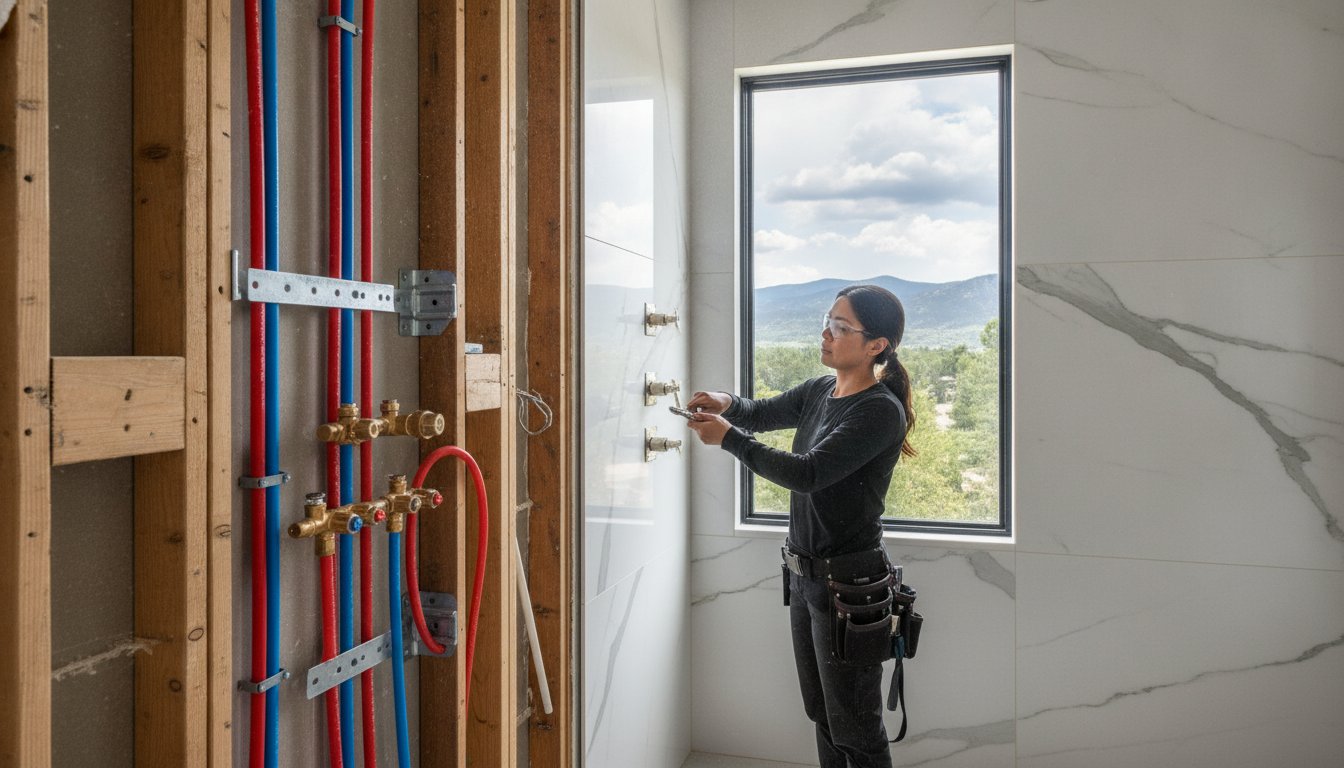
The most exquisite slab of Calacatta marble is only as secure as the pipework hidden behind it. While aesthetics drive the vision, the success of a premium project depends entirely on the plumbing for bathroom remodel work performed at the structural level. It's natural to feel a sense of trepidation regarding the integrity of new installations, particularly when integrating complex, multi-head shower systems or custom stone work that allows no margin for error. Reliability isn't a luxury; it's the fundamental requirement for any master suite intended to last for decades.
This article provides a definitive roadmap for mastering the technical infrastructure and engineering standards necessary to support high-performance fixtures. You'll gain clarity on the 2025 Denver Building and Fire Codes, including the specific requirements for high-altitude gas appliance derating and the mandatory transition to high-efficiency water heating systems. Optimal performance and leak-proof longevity are secured through precise mechanical upgrades and meticulous component selection. From navigating local permit protocols to calibrating thermostatic valves, this guide ensures your renovation reflects a commitment to structural permanence and professional excellence.
Key Takeaways
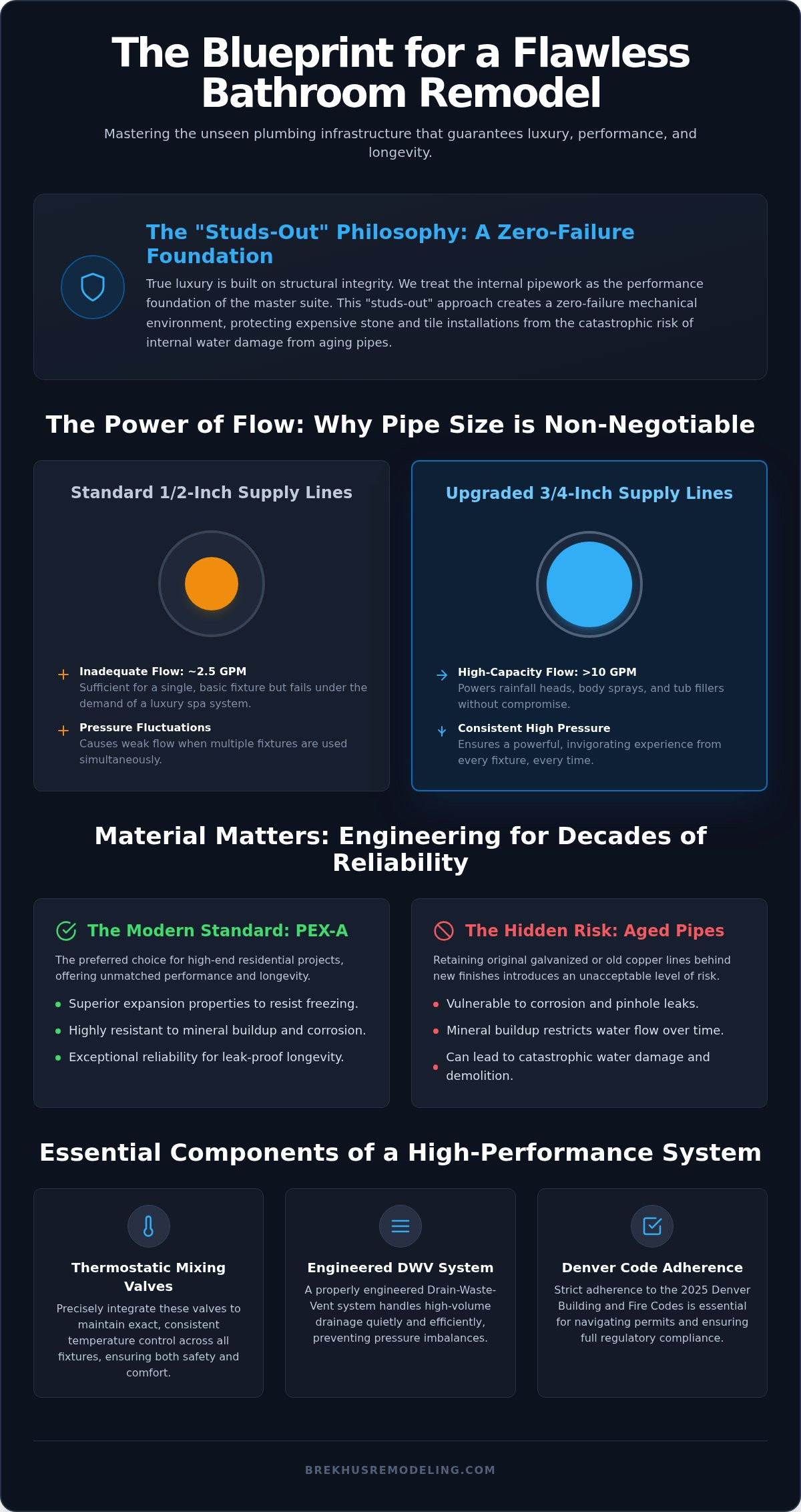
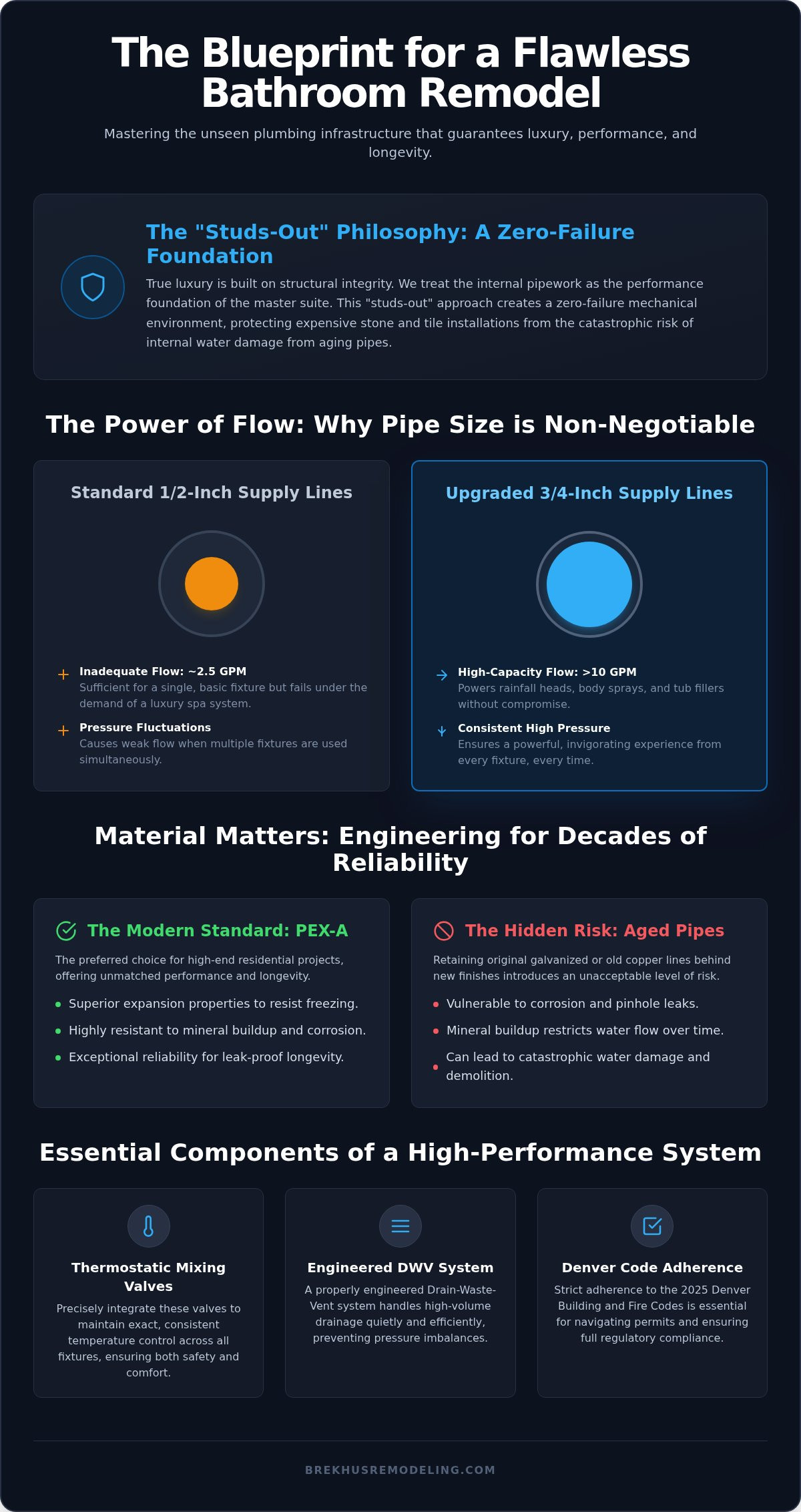
- Upgrading to 3/4-inch supply lines is a technical necessity to ensure high-capacity rainfall heads and multi-spray systems operate without pressure fluctuations.
- Evaluate the engineering advantages of PEX-A over copper to provide the superior expansion properties and reliability required for high-end residential projects.
- Executing rigorous plumbing for bathroom remodel work involves the precise integration of thermostatic mixing valves to maintain exact temperature control across all fixtures.
- Adherence to the 2025 Denver Building and Fire Codes is essential for navigating the local permit process and ensuring full regulatory compliance.
- A "studs-out" reconstruction strategy creates a zero-failure mechanical environment that protects expensive stone and tile installations from the risk of internal water damage.
The Role of Advanced Plumbing in High-End Bathroom Reconstruction
Luxury plumbing reconstruction represents a comprehensive mechanical upgrade that extends far beyond the installation of high-end faucets or designer basins. In a professional environment, plumbing for bathroom remodel projects focuses on a "studs-out" approach. This methodology treats the internal pipework as the performance foundation of the master suite. Surface-level fixture swaps often fail because they ignore the underlying infrastructure. Modern high-pressure fixtures require a mechanical system capable of supporting increased volume and precise temperature regulation. Without this baseline, the most expensive finishes are merely masking a structural liability. The integrity of the mechanical phase dictates the longevity of the entire project.
Beyond the Fixtures: Why Infrastructure Matters
Infrastructure determines the long-term viability of a renovation. Retaining original galvanized or standard copper lines behind $20,000 of premium stone or custom tile introduces an unacceptable level of risk. Corrosion or pinhole leaks in aged pipes can lead to catastrophic damage; this often necessitates the complete demolition of the finished space. Upgrading to advanced materials like PEX-A or high-grade copper ensures the mechanical system matches the lifespan of the architectural finishes. In the Denver residential market, a documented, high-performance plumbing overhaul significantly enhances property value. A proper evaluation of the existing system includes:
- Assessment of internal pipe diameter for modern flow requirements.
- Inspection for existing mineral buildup in galvanized lines.
- Verification of structural supports for new, heavier pipe loads.
This rigorous inspection provides future owners with verified structural integrity and peace of mind regarding the home's primary systems. Settling for surface-level upgrades compromises the entire investment.
The Impact of Layout Changes on Mechanical Design
Reconfiguring a bathroom layout introduces significant technical complexity. Moving main stack lines or primary drains requires a rigorous assessment of the home's structural framing. Routing new lines through floor joists must be executed without compromising the load-bearing capacity of the floor. A critical component of this phase is the Drain-Waste-Vent (DWV) system, which must be engineered to handle the increased load of high-efficiency drainage. Proper venting prevents pressure imbalances and ensures the quiet, efficient removal of waste. Every layout change must adhere to the 2025 Denver Building and Fire Codes to ensure the project passes inspection and functions flawlessly under peak demand. This phase requires meticulous planning to ensure that new configurations don't interfere with existing electrical or HVAC systems.
Essential Plumbing Infrastructure: Below the Surface of a Master Suite
The transition from a standard bathroom to a luxury master suite requires a fundamental shift in hydraulic engineering. Most residential builds utilize 1/2-inch supply lines, which are sufficient for basic fixtures but fail under the volumetric demand of a custom spa. When executing professional plumbing for bathroom remodel projects, the installation of 3/4-inch trunk lines becomes the mandatory standard. This increased diameter ensures that multiple high-flow fixtures can operate simultaneously without the pressure drops that plague inferior renovations. Infrastructure is the silent partner of design; it ensures that a rain head maintains its intended velocity even while a secondary soaking tub is filling.
Pipe Sizing and Water Volume Requirements
Calculating the total gallons per minute (GPM) is the first step in high-end mechanical planning. A traditional shower head typically operates at 2.5 GPM, but a luxury configuration featuring a large-format rain head, four body sprays, and a handheld wand can easily exceed 10 GPM. Meeting this demand requires a 3/4-inch supply to the manifold to maintain consistent pressure. While copper remains a respected choice for its rigidity, many master craftsmen now prioritize PEX-A for its superior expansion properties and resistance to mineral buildup. PEX-A utilizes expansion fittings that do not restrict flow at the joints, unlike standard PEX-B or older copper press systems. This material choice is particularly critical in Denver, where temperature fluctuations and water chemistry can impact the longevity of rigid metallic lines.
Modern Drainage and Waste Systems
The trend toward curbless, walk-in showers introduces significant sub-floor challenges. Achieving a seamless, barrier-free entry requires the floor joists to be notched or lowered to create the necessary pitch for drainage. This engineering must be precise, maintaining a slope of at least 1/4 inch per foot to ensure water moves efficiently toward the drain without pooling. Linear drains are the preferred solution for large-format tile layouts, as they allow for a single-plane slope that simplifies the installation of expansive stone slabs. High-volume systems also necessitate dedicated vent stacks to prevent trap siphoning and ensure quiet operation. Integrating upgrading plumbing and electrical for a home remodel ensures the mechanical foundation is robust enough to support these advanced configurations. All fixtures selected for these projects should meet or exceed WaterSense efficiency standards to balance high-performance output with sustainable water management. If you are planning a complex structural change, consulting with a specialist in premium bathrooms ensures every technical detail is addressed before the first slab of stone is set.
Engineering Luxury: Plumbing Requirements for Custom Showers and Fixtures
The mechanical execution of a high-end shower requires a level of precision that standard retail kits cannot replicate. In a professional plumbing for bathroom remodel, the focus shifts toward sophisticated hydraulic management to support multi-outlet configurations. This involves the installation of a pressure-balancing loop for body sprays, ensuring that each nozzle delivers an identical volume of water. Without this specific engineering, the fixture furthest from the supply line would suffer from a noticeable drop in performance. The goal is a seamless, high-velocity experience that remains consistent regardless of the number of active outlets.
Thermostatic vs. Pressure-Balanced Valves
Thermostatic mixing valves represent the pinnacle of temperature regulation in luxury design. These components utilize a wax element or bimetallic coil to maintain a constant water temperature within a one-degree variance. This technology is superior to standard pressure-balanced valves, which only react to changes in pressure rather than actual temperature. For a bespoke experience, thermostatic systems are paired with independent volume controls. This configuration allows the user to activate a large-format rain head at full capacity while maintaining a gentle flow for body sprays. Integrated anti-scald technology provides an essential layer of safety, preventing sudden temperature spikes when other appliances are used within the home. This level of control is a fundamental requirement for any high-performance master suite.
Integrating a steam generator adds a layer of technical complexity to the rough-in phase. These units require a dedicated cold water supply, a vapor-proof enclosure, and a precise drainage path for the auto-flush system. The generator must be positioned within a specific distance of the shower to minimize heat loss through the supply lines. In the Denver area, the 2025 Building and Fire Codes dictate specific venting and electrical requirements for these systems to ensure safe operation. Proper placement of the steam head is equally critical; it must be situated to optimize heat distribution while remaining clear of the bather's direct contact.
Specialized Fixture Installation
Concealed tank systems for wall-hung toilets offer a minimalist aesthetic while requiring rigorous structural support. These units utilize a heavy-duty steel carrier bolted directly to the wall studs, capable of supporting weights exceeding 500 pounds. This installation must be perfectly level to ensure the final porcelain fixture aligns with the tile grout lines. For freestanding tubs, the engineering focus moves to floor-mounted fillers and overflow drainage. These fillers require a dedicated rough-in manifold secured beneath the subfloor to prevent any movement or wobbling of the tall, slender faucet. Integrating high-end bathroom fixtures during the initial plumbing for bathroom remodel phase ensures that all mechanical connections are perfectly positioned before the stone finishes are applied. This proactive approach eliminates the need for invasive adjustments during the final trim out.
Navigating Technical Standards and Denver-Specific Plumbing Logistics
Denver's specific environmental and regulatory landscape requires a localized approach to mechanical engineering. Executing plumbing for bathroom remodel projects in the Mile High City involves more than just following national standards. As of December 31, 2025, all residential projects must adhere to the 2025 Denver Building and Fire Codes, which incorporate the 2021 International Plumbing Code with specific local amendments. Denver is a home rule municipality, meaning regulations are strictly enforced at the city level. Mastery of these codes is not optional; it's the baseline for ensuring a project is legally compliant and structurally sound.
Permitting and Code Compliance in Denver
The permit process in Denver is methodical and requires professional coordination. For a typical renovation, standalone plumbing permits carry a base fee of $43.00, with projects exceeding $2,000 requiring an additional plan review fee of 50%. Processing times generally range from five to ten business days. Licensed oversight is mandatory to navigate the sequence of rough-in inspections that must occur before any walls are closed. These inspections verify that drainage pitch, venting, and supply line pressure tests meet the rigid standards required for modern habitation. Professional bathroom remodeling services ensure that every technical requirement, including the installation of backflow preventers to protect the city's potable water supply, is meticulously documented and executed.
Pressure Management and Thermal Expansion
High static water pressure is a frequent challenge in several Denver neighborhoods. If municipal supply pressure exceeds 80 PSI, the installation of a Pressure Reducing Valve (PRV) is essential to protect the delicate ceramic cartridges found in high-end fixtures. Excessive pressure leads to premature seal failure and water hammer, a phenomenon where high-velocity water creates structural vibrations and noise. To mitigate this, we integrate thermal expansion tanks on water heating systems. These tanks provide a necessary buffer for water as it expands during the heating cycle, preventing stress on the new pipework and maintaining the integrity of the system. This proactive management is vital for the longevity of luxury mechanical systems.
Denver's climate necessitates advanced freeze protection strategies. Routing plumbing through exterior-facing walls is avoided whenever possible. When architectural constraints require such placement, we utilize high-density closed-cell insulation and specific offset techniques to keep lines within the home's thermal envelope. This rigorous attention to detail prevents the catastrophic pipe bursts that often follow Colorado's deep-freeze cycles. If you require a mechanical system engineered for the specific demands of the Front Range, contact our team to discuss premium bathrooms.
The Brekhus Standard: Integrating Mechanical Integrity with Precision Finishes
The "studs-out" philosophy is the only viable method for ensuring a zero-failure environment in a luxury suite. By stripping the space back to its structural framing, we eliminate the hidden variables of legacy construction. This comprehensive approach to plumbing for bathroom remodel projects allows for the installation of perfectly plumb supply lines and precisely pitched drainage systems. When the mechanical rough-in is accurate to the millimeter, the subsequent stone and tile installation achieves a level of symmetry that's impossible to reach with a "make-it-work" mentality. Precision behind the wall is what enables the flawless alignment of a book-matched marble shower or a perfectly centered freestanding tub filler.
Waterproofing and Flood Testing
Rigorous testing protocols must precede the application of any finish material. We employ a mandatory 24-hour flood test for all custom shower pans to verify the integrity of the base before a single tile is set. This process involves plugging the drain and filling the pan to its threshold to confirm there's zero moisture migration. Integrating advanced membrane systems with the plumbing drains creates a monolithic, waterproof envelope. This technical synergy prevents the subsurface leaks that often compromise expensive stone work. Our testing sequence includes:
- Static pressure testing of all supply lines at 100 PSI to identify potential weak points.
- Drainage flow testing to ensure rapid evacuation without gurgling or air locks.
- Verification of all mechanical supports to prevent pipe vibration or "knocking" during high-flow usage.
These steps ensure that the plumbing for bathroom remodel work is not just functional, but silent and secure. It's the difference between a standard renovation and a master-crafted suite designed for longevity.
Final Assembly and Performance Validation
The final trim phase requires an understanding of material physics and a steady hand. Installing heavy brass fixtures on delicate stone surfaces requires specialized gaskets and precise torque to avoid cracking or marring the finish. Every thermostatic system is calibrated during this stage to ensure immediate user comfort and accurate temperature delivery across all outlets. A final mechanical walkthrough validates that every component, from the body sprays to the steam generator, operates at peak efficiency. Selecting a home remodeling contractor with this level of technical discipline ensures your vision is supported by unwavering structural permanence. We don't just build bathrooms; we engineer high-performance environments that stand the test of time.
Securing the Structural Integrity of Your Master Suite
The success of a high-performance renovation resides in the invisible architecture of the build. Prioritizing the plumbing for bathroom remodel phase ensures that sophisticated fixtures operate at their intended capacity while protecting your investment in premium stone and custom cabinetry. Mastery of local building standards and a rigorous "studs-out" approach are the only ways to guarantee structural permanence in a modern master suite. Reliability is achieved through meticulous planning and the precise execution of mechanical systems.
Brekhus Remodeling brings over 20 years of high-end Denver experience to every project. We are licensed and insured for complex residential mechanical systems, specializing in the delicate engineering required for curbless showers and seamless stone integration. This technical rigor provides the unwavering reliability your home deserves. Consult with Brekhus Remodeling for Your Denver Master Suite Project to begin engineering your vision with absolute confidence. Your pursuit of excellence begins with a foundation built to last a lifetime.
Frequently Asked Questions
Do I need to replace my pipes during a bathroom remodel if they aren’t leaking?
Replacing aging or undersized supply lines is mandatory when the renovation involves high-value finishes like stone or custom tile. Even if pipes aren't leaking, original galvanized or standard 1/2-inch copper lines often lack the volume required for modern high-flow fixtures. Structural permanence is secured by installing 3/4-inch trunk lines during the rough-in phase. This proactive measure prevents the catastrophic necessity of demolishing a finished suite to address a future mechanical failure.
How much does it cost to move a toilet or shower drain in Denver?
Moving a primary drain or stack line involves significant technical complexity and a rigorous structural assessment. In Denver residential projects, the total investment depends on the subfloor material and the distance from the existing main waste line. Trenching through concrete or notching floor joists requires precise engineering to maintain the required 1/4-inch per foot slope. Homeowners should consult a specialist to evaluate the specific mechanical and structural requirements for their unique layout.
What is the benefit of a thermostatic shower valve over a standard one?
Thermostatic valves provide exact temperature regulation by utilizing a wax element to maintain water within a one-degree variance. This technology is superior to pressure-balanced valves, which only react to pressure changes rather than actual temperature. These systems allow for independent volume control across multiple outlets; this enables the user to activate a rain head and body sprays simultaneously without temperature fluctuations. It's a fundamental requirement for a high-performance master suite.
Can my existing water heater handle a new luxury master shower?
Standard residential water heaters are rarely sufficient for the volumetric demands of a luxury multi-head shower. High-flow systems can exhaust a 50-gallon tank in minutes. Beginning in 2026, Colorado regulations require the installation of high-efficiency units, such as heat pump water heaters, for new installations. Upgrading to a high-capacity system ensures consistent hot water delivery during peak usage without compromising the efficiency of the home's primary mechanical systems.
Do I need a permit for plumbing work in a bathroom renovation?
Denver building codes mandate a permit for all plumbing modifications, including fixture relocation and line upgrades. Performing plumbing for bathroom remodel work without a permit can result in doubled fees and stop-work orders. The process includes a rough-in inspection to verify drainage pitch and supply line pressure before walls are closed. Licensed oversight ensures the project adheres to the 2025 Denver Building and Fire Codes for full regulatory compliance.
What is a curbless shower, and what are the plumbing requirements?
Curbless shower engineering requires the subfloor to be recessed to achieve a barrier-free entry while maintaining a proper drainage slope. This involves specialized framing to notch or lower joists without compromising structural integrity. Linear drains are often utilized to allow for a single-plane pitch toward the waste line. Proper waterproofing integration with the drain flange is critical to prevent moisture migration into the surrounding floor structure and ensure a zero-failure environment.
How long does the plumbing phase of a bathroom remodel typically take?
The plumbing for bathroom remodel phase is divided into the rough-in and the final trim out. A comprehensive rough-in, including structural modifications and line upgrades, generally requires five to seven business days. This timeline accounts for the rigorous pressure testing and mandatory city inspections. The final assembly and calibration of high-end fixtures occur after the stone and tile installation is complete; this usually adds another two to three days to the schedule.
Why is water pressure a concern for high-end bathroom fixtures?
High-end fixtures are engineered to operate within a specific pressure range, typically between 45 and 80 PSI. In certain Denver neighborhoods, municipal static pressure can exceed these limits; this necessitates the installation of a Pressure Reducing Valve to protect delicate ceramic cartridges. Conversely, insufficient pressure prevents rainfall heads and body sprays from achieving their intended velocity. Proper calibration ensures optimal performance and prevents the structural vibrations known as water hammer.