Plumbing for Bathroom Remodel: The Engineering Foundation of Luxury
Discover the engineering behind a luxury renovation. Our guide to plumbing for bathroom remodel covers high-flow fixtures, structural integrity & modernizing...
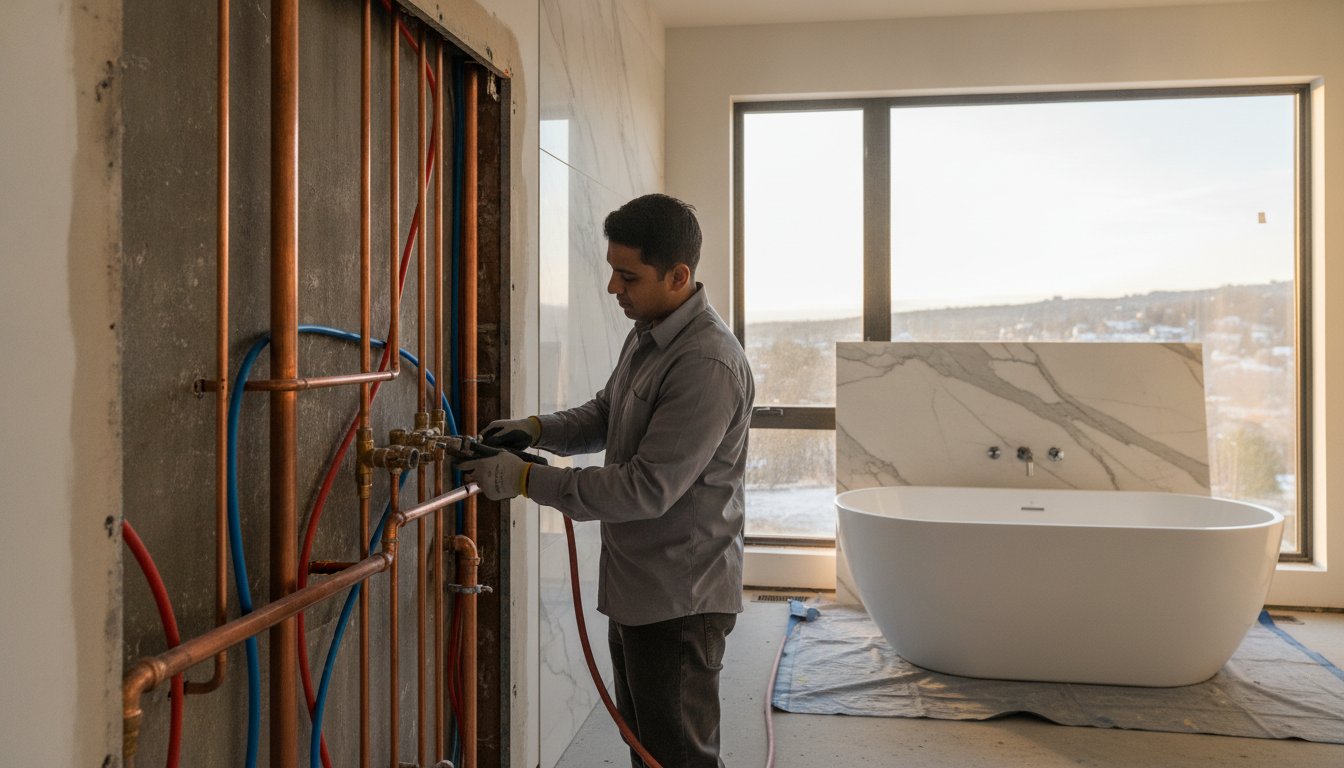
The most exquisite stone finishes and custom cabinetry are essentially decorative masks for the complex network of pipes that define a room’s true value. A high-end plumbing for bathroom remodel requires more than just connecting fixtures; it demands an engineering mindset that prioritizes structural integrity and hydraulic performance. While the aesthetic choices capture the attention, the technical execution beneath the surface determines whether a renovation lasts for decades or fails within months. Many homeowners understandably feel anxiety regarding the hidden complexities of relocating main stacks or ensuring sufficient pressure for sophisticated multi-head shower systems.
You recognize that a luxury space is only as functional as its weakest connection. A leak-proof, high-performance environment is the direct result of rigorous infrastructure upgrades and precise technical mastery. This article provides a detailed analysis of how these invisible systems support your design goals. We will explore the necessity of modernizing supply lines to meet 2026 standards, the logistics of reconfiguring layouts without compromising floor joists, and the specific requirements for integrating high-flow fixtures into existing residential systems. Understanding these foundational elements ensures your investment remains protected by superior craftsmanship and sound mechanical logic.
Key Takeaways
- Understand why structural integrity must precede aesthetic choices to ensure the long-term viability of high-end stone and tile finishes.
- Learn the technical specifications required for high-performance showers, ensuring your plumbing for bathroom remodel supports multi-head systems and thermostatic control.
- Identify when aging infrastructure requires upgrading to meet the hydraulic demands and venting requirements of modern, high-efficiency fixtures.
- Evaluate professional-grade materials and soundproofing techniques that preserve the tranquility and mechanical performance of a master suite.
- Recognize the necessity of coordinating master plumbers with stone experts to achieve precise, leak-proof results in complex custom installations.
The Architectural Significance of Plumbing in Luxury Bathroom Remodeling
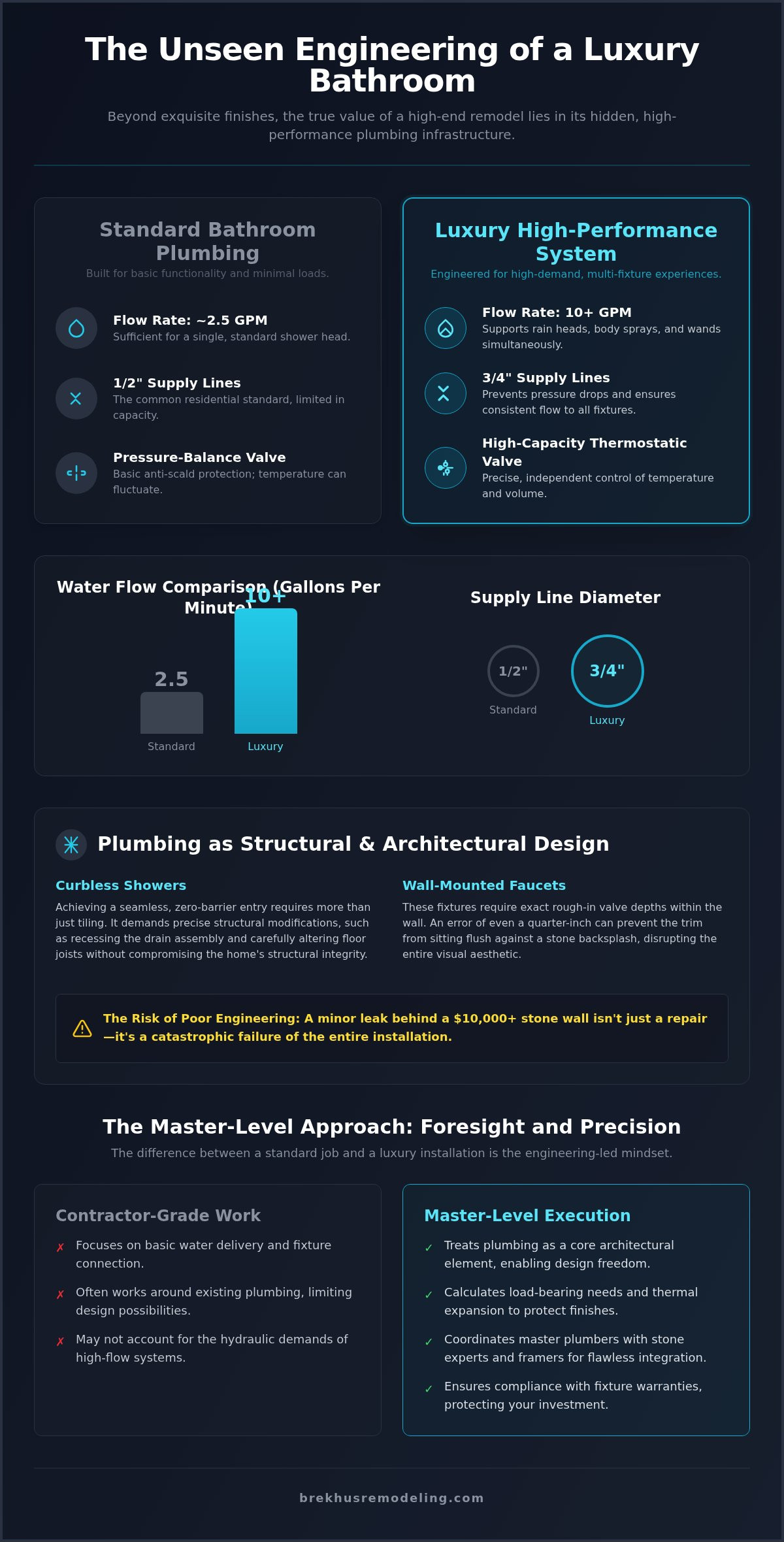
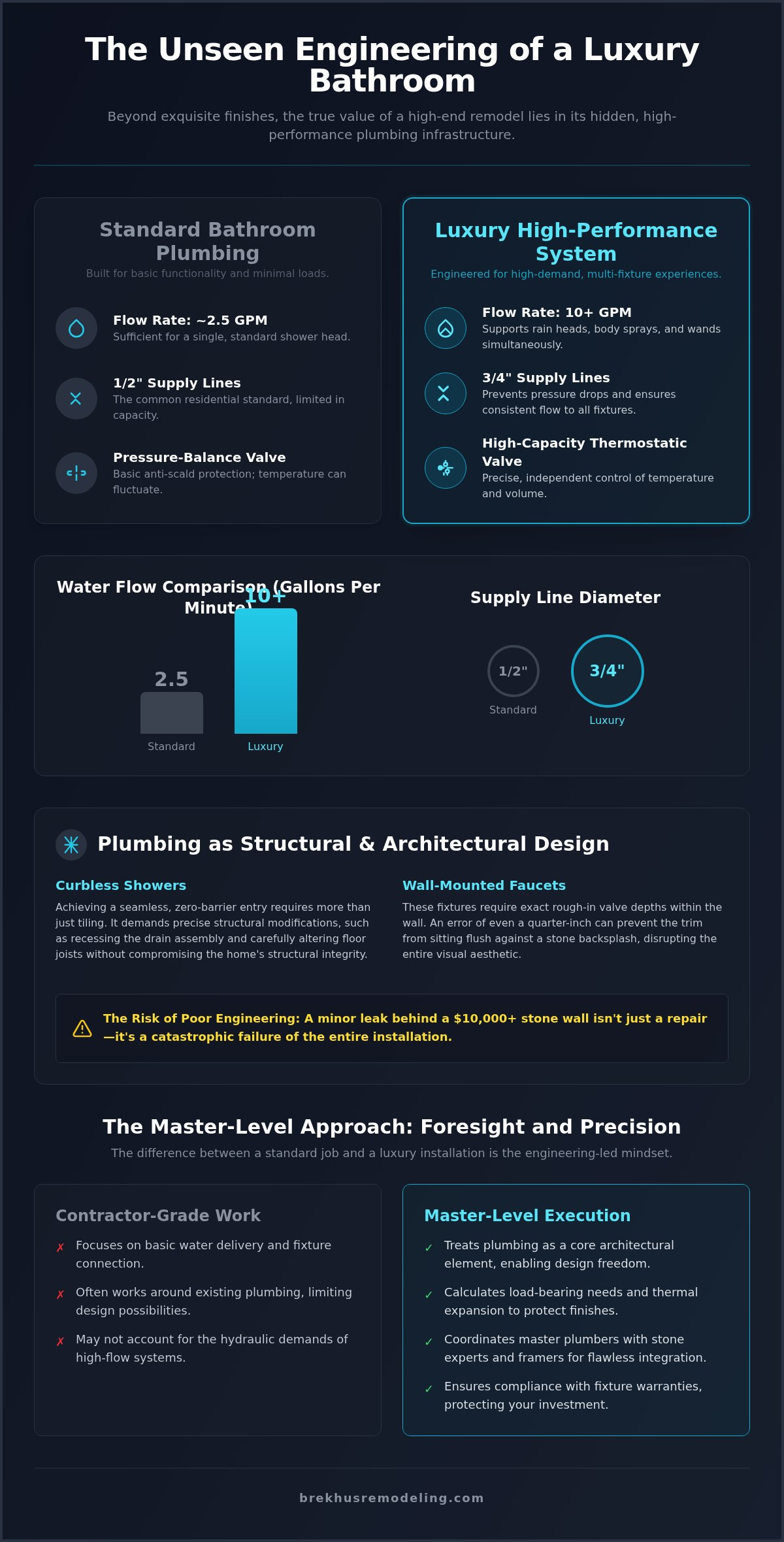
Luxury design is often perceived through the lens of visible finishes, yet the true caliber of a renovation is defined by what remains hidden. A sophisticated plumbing for bathroom remodel serves as the mechanical skeleton for the entire project. High-end aesthetic choices, such as large-format porcelain or natural marble slabs, require a substrate that is perfectly stable and vibration-free. Any minor shift or thermal expansion in the underlying pipes can lead to cracked grout lines or compromised stone surfaces. Master-level plumbing moves beyond basic functionality; it prioritizes the structural integrity of the home by calculating load-bearing requirements and thermal movement before a single piece of stone is set.
The distinction between contractor-grade work and master-level execution lies in the foresight of the installation. While basic services focus on simple water delivery, an engineering-led approach considers the architectural flow of the space. This involves the strategic placement of vent stacks and supply lines to maximize ceiling heights and floor space. By treating modern plumbing systems as a core architectural element, the design remains uncompromised by the limitations of standard pipe routing.
Beyond the Surface: Plumbing as Structural Design
The realization of a curbless shower entry depends entirely on the precision of the drain assembly and the modification of the floor joists. Achieving a seamless transition from the bathroom floor to the shower requires the plumber to coordinate with framing experts to recess the drainage system without weakening the structure. Wall-mounted faucets present a similar challenge. These fixtures demand exact rough-in depths within the wall cavity. If the valve is set even a quarter-inch off the mark, the finished trim will fail to sit flush against the bespoke stone backsplash, ruining the visual symmetry of the room. Integrating these components into stone layouts requires a level of accuracy that standard installations don't provide.
The Long-Term Value of Technical Precision
Investing in technical precision protects the homeowner from the catastrophic failure of premium materials. A leak behind a ten-thousand-dollar stone wall is a financial disaster that proper engineering prevents. In the Denver market, where temperature fluctuations can stress residential infrastructure, the use of high-performance materials is essential for maintaining home resale value. This level of professional plumbing for bathroom remodel is often a prerequisite for luxury fixture warranties. Many manufacturers of high-end thermostatic valves require proof of professional installation to honor their performance guarantees. This documentation provides peace of mind and ensures the bathroom remains a high-performing asset for decades.
Engineering Infrastructure for Custom Shower Systems
High-performance shower systems represent the pinnacle of residential hydraulic engineering. A standard shower head typically operates at 2.5 gallons per minute (GPM), but a luxury master suite often incorporates rain heads, body sprays, and hand-held wands that can collectively exceed 10 GPM. This significant volume of water requires a fundamental rethink of the plumbing for bathroom remodel. Standard half-inch supply lines are frequently insufficient for these loads. Upgrading to three-quarter-inch piping ensures that multiple fixtures can operate simultaneously without a drop in pressure or temperature stability. This infrastructure must be established long before the first tile is set.
High-Flow Valves and Multi-Outlet Configurations
Achieving a consistent experience in a multi-outlet shower requires the installation of high-capacity thermostatic valves. Unlike basic pressure-balance valves, thermostatic models allow for independent control of volume and temperature. This precision prevents thermal fluctuations when water is used elsewhere in the home. According to the International Residential Code, all systems must meet specific safety standards for anti-scald protection, yet luxury builds go beyond mere compliance. The placement of diverters must be calculated with ergonomic precision, ensuring that controls are accessible before the user enters the water stream. This level of planning prevents the common frustration of reaching through a cold spray to adjust the temperature.
Linear Drains and Curbless Waterproofing
Managing high water volume also necessitates an advanced drainage strategy. A standard two-inch drain may reach its limit when managing a high-flow rain head and multiple body sprays. Linear drains offer a technical advantage here; they provide a wider catchment area and allow for a single-plane floor slope. This configuration is essential for a successful custom shower install that utilizes large-format tile. Engineering the floor slope requires a minimum pitch of one-quarter inch per foot toward the drain to prevent pooling and ensure rapid evacuation of water.
Waterproofing for curbless designs is a multi-layered process involving specialized membranes and bonded flange drains. The transition from the wet area to the dry zone must be seamless yet perfectly sealed against moisture migration. Our team at Brekhus Remodeling integrates these technical requirements into every phase of the build, ensuring the invisible infrastructure supports the visible luxury. Proper coordination between the master plumber and the stone installation team is the only way to guarantee a leak-proof, high-performance environment that stands the test of time.
Assessing and Upgrading Main Line Capacity for Modern Fixtures
Modernizing the infrastructure of a Denver home requires a critical evaluation of existing supply and waste lines. Many older residences still utilize galvanized steel or thin-walled copper that has suffered decades of mineral buildup. When planning a plumbing for bathroom remodel, these aging materials represent a significant liability. Corroded pipes restrict flow and introduce sediment into high-end thermostatic valves, potentially voiding manufacturer warranties and degrading performance. Structural longevity depends on replacing these legacy systems with modern materials before the subfloor is sealed. In 2026, more than 60% of new residential plumbing installations utilize PEX tubing for its durability and resistance to scale buildup, though high-grade copper remains the standard for visible, high-pressure applications.
Managing the hydraulic demands of a multi-story residence requires precise pressure regulation. In Denver's varied topography, municipal water pressure can fluctuate significantly. High-performance fixtures often require a stable range between 45 and 60 psi. Integrating a Pressure Reducing Valve (PRV) is a standard requirement for protecting sensitive internal ceramic cartridges from high-pressure spikes. This technical foresight ensures that your investment in premium fixtures is protected from mechanical stress and premature failure.
Pipe Sizing and Water Pressure Requirements
The transition from a standard bathroom to a luxury suite often necessitates an upgrade in supply line diameter. Standard half-inch lines are designed for single-fixture use; however, they cannot support the simultaneous operation of a soaking tub and a multi-jet shower. Upgrading to three-quarter-inch mains allows for a higher volume of water delivery without a corresponding drop in velocity. Adhering to the International Plumbing Code (IPC) general regulations ensures that these sizing calculations meet safety and performance standards. Addressing these flow issues during the demolition phase is the only way to guarantee a high-performance outcome that meets the expectations of a luxury build.
Relocating Stacks and Venting in Full Remodels
Relocating a toilet or a main waste stack is a complex structural procedure that involves more than just moving a pipe. It requires re-engineering the venting system to ensure that air flows freely, preventing sewer gas entry and slow drainage. Modern high-efficiency toilets, which use 1.28 gallons per flush or less, are particularly sensitive to improper venting. Denver building codes require strict adherence to slope and distance ratios for all drain-waste-vent (DWV) systems. Moving a main stack often involves navigating structural floor joists and load-bearing walls; this work must be coordinated with a master plumber to maintain the home's architectural integrity. Careful planning prevents the need for unsightly bulkheads or compromised ceiling heights in the rooms below, preserving the aesthetic value of the entire property.
Material Selection and Technical Standards for Longevity
The selection of materials dictates the ultimate lifespan of a plumbing for bathroom remodel. High-performance projects require components that exceed minimum building codes to ensure structural permanence. In the Denver market, where winter temperatures fluctuate, pipe placement must be climate-resilient. This involves avoiding exterior walls whenever possible and utilizing high-density insulation to prevent thermal stress. Technical standards also dictate the installation of quarter-turn stainless steel ball valves for all shut-offs. These provide superior reliability compared to standard multi-turn valves, ensuring that water can be isolated quickly without the risk of mechanical seizure over time.
Adhering to current 2026 standards also means a strict prohibition on the reuse of existing plumbing materials. Every component, from the sub-floor drains to the supply manifolds, must be new and professionally tested. This commitment to fresh infrastructure prevents the contamination and failure risks associated with aged equipment, providing a clean slate for the luxury finishes that follow.
Copper vs. PEX: The Professional Verdict
The choice between copper and PEX is a matter of specific performance characteristics rather than just budget. Type L copper remains the standard for premium builds due to its rigidity and proven track record of reliability over many decades. It offers excellent resistance to bacterial growth and doesn't sag over time. However, PEX-A provides significant advantages in complex residential layouts. Its flexibility allows for continuous runs with fewer joints, which naturally reduces potential leak points behind expensive stone finishes. Many high-end renovations utilize a hybrid approach. This strategy uses copper for visible manifold areas and PEX-A for the intricate routing to individual fixtures, combining the strengths of both materials.
Acoustic Engineering and Pipe Insulation
Luxury is defined as much by silence as it is by aesthetics. Acoustic engineering is a critical but often overlooked component of master suite design. Standard PVC waste lines are frequently loud, creating a distracting noise in adjacent rooms when water is moving. Utilizing cast iron for vertical waste stacks significantly dampens this sound through its sheer density. For supply lines, high-grade rubber insulation serves a dual purpose. It maintains thermal efficiency for rapid hot water delivery and minimizes the vibration noise associated with high-pressure systems. Strategic pipe routing ensures that plumbing lines are kept away from shared bedroom walls, preserving the tranquility of the home.
To ensure your home infrastructure is built to these exacting technical standards, contact the master craftsmen at Brekhus Remodeling for a professional consultation.
The Brekhus Approach: Precision Plumbing Integration
The success of a luxury renovation depends on the seamless integration of disparate technical trades. At Brekhus Remodeling, we treat the mechanical phase as the most critical stage of the build. This involves upgrading plumbing and electrical for a home remodel to ensure the home’s infrastructure can handle the increased loads of modern automation and high-flow fixtures. Our process moves beyond simple installation; it's a coordinated effort where master plumbers, stone experts, and project managers work in unison to eliminate the margin for error. This high-stakes coordination is what separates a standard plumbing for bathroom remodel from a custom-engineered masterpiece.
Coordination Between Master Craftsmen
Achieving the zero-tolerance alignment required for high-end finishes starts with the initial rough-in. We coordinate the plumbing for bathroom remodel layouts with custom cabinetry designs and specific stone slab dimensions. If a wall-mounted faucet valve is misaligned by even a fraction of an inch, the entire stone backsplash must be recut to maintain visual symmetry. Our project managers verify these technical tolerances before any walls are closed, utilizing laser-leveling to confirm fixture heights and depths. This meticulous synchronization ensures that every fixture sits perfectly flush and every drain aligns precisely with the tile pattern, preserving the architectural flow of the room.
Rigorous Quality Control Protocols
We implement a series of redundant testing protocols to guarantee long-term reliability and structural permanence. Every project we execute undergoes a mandatory 24-hour flood test for shower pans and linear drains. This process involves plugging the drain and filling the basin to its threshold to identify potential vulnerabilities in the waterproofing membrane before any tile is laid. We also conduct high-pressure testing on all supply lines, exceeding standard municipal requirements to confirm the integrity of every joint and connection. This rigorous approach prevents the catastrophic leaks that can ruin expensive finishes years after completion.
The final stage of our approach is the formal commissioning of luxury fixtures. This includes calibrating thermostatic valves to exact temperature specifications and verifying GPM flow rates against the calculated drainage capacity. We ensure that diverters operate smoothly and that water pressure remains consistent across all outlets. We don't consider a project complete until the hydraulic performance matches the architectural intent. This disciplined transition from technical plumbing to aesthetic finishing is what defines a Brekhus renovation.
Securing the Future of Your Luxury Investment
A sophisticated bathroom is only as permanent as the mechanical precision supporting it. Prioritizing technical integrity over surface-level aesthetics ensures that your premium stone and tile remain protected from the risks of moisture migration and structural vibration. By upgrading main line capacity and selecting climate-resilient materials, you establish a high-performance environment that meets the rigorous demands of modern fixtures. A successful plumbing for bathroom remodel requires the unwavering coordination of master plumbers and stone experts to achieve zero-tolerance alignment.
Since 2004, our team has specialized in custom shower engineering and the complex integration of residential infrastructure. We provide the technical mastery necessary to translate architectural vision into a durable, leak-proof reality. This disciplined approach preserves both the functionality of your master suite and the long-term value of your property. Schedule a consultation for your premium Denver bathroom remodel to ensure your project is built on a foundation of professional excellence. We look forward to bringing your vision to life with the rigor it deserves.
Frequently Asked Questions
Do I need to replace all the plumbing during a bathroom remodel?
Complete replacement is recommended if existing lines consist of galvanized steel or aging copper with significant mineral buildup. While it increases the initial scope, updating the plumbing for bathroom remodel ensures that new luxury fixtures operate at peak performance without the risk of sediment damage. We evaluate the integrity of supply and waste lines during demolition. Preserving outdated infrastructure behind new stone walls often leads to costly repairs that compromise the entire renovation.
How much does it cost to move a toilet or shower drain?
Relocating a toilet or shower drain involves significant structural modifications to the floor joists and waste stacks. The technical requirements depend on the distance from the main soil stack and the direction of the existing framing. In Denver homes, moving these lines often requires re-engineering the venting system to ensure compliance with local codes. Precise planning during the demolition phase is necessary to maintain the proper drainage slope and avoid compromising the ceiling heights in rooms below.
What is the best type of pipe for a luxury bathroom renovation?
Type L copper is considered the gold standard for premium residential builds due to its exceptional longevity and rigid structure. It provides a reliable, high-pressure solution that resists bacterial growth over several decades. For complex layouts with multiple bends, PEX-A offers superior flexibility and fewer potential leak points because it requires fewer fittings. Many master-level installations utilize a hybrid approach, using copper for visible manifolds and PEX-A for the intricate routing to individual fixtures.
Can my existing water heater support a new high-flow custom shower?
Standard residential water heaters often lack the recovery rate or capacity to support high-flow shower systems that exceed 10 gallons per minute. If you're installing multiple body sprays and rain heads, you may need to upgrade to a high-capacity tank or a tankless system with a higher BTU rating. We calculate the total GPM of all fixtures to determine if your current water heating infrastructure can maintain consistent temperatures during simultaneous use throughout the home.
Do I need a permit for plumbing changes in Denver?
Yes, the City and County of Denver requires a plumbing permit for any project involving the alteration, relocation, or replacement of supply and waste lines. This process ensures that the work complies with the latest International Plumbing Code standards and local amendments. Professional oversight during the permitting and inspection phases is essential for maintaining the home's legal standing and protecting the structural integrity of the renovation. It also provides a documented record of professional quality.
How do I prevent plumbing noise in a renovated master bathroom?
Acoustic engineering is the primary method for reducing plumbing noise in a master suite. Replacing standard PVC waste stacks with cast iron significantly dampens the sound of rushing water due to the material's sheer density. Additionally, insulating supply lines with high-grade rubber foam and utilizing sound-dampening clips helps prevent mechanical vibrations. Strategic pipe routing away from shared bedroom walls further ensures a tranquil environment, which is a hallmark of a high-end residential renovation.
What is a thermostatic valve and why is it recommended for custom showers?
A thermostatic valve allows for independent control of water temperature and volume, providing a consistent experience regardless of water usage elsewhere in the home. Unlike pressure-balance valves, which only adjust for pressure fluctuations, thermostatic models maintain a precise temperature setting to within one degree. This is highly recommended for custom showers with multiple outlets. It ensures that your rain head and body sprays operate at the exact comfort level you desire without the risk of thermal shock.
How does a curbless shower impact the existing plumbing layout?
Achieving a curbless entry requires recessing the shower drain and sloping the subfloor beneath the standard floor level. This often necessitates modifying existing floor joists to accommodate the lower profile while maintaining structural strength. The plumbing for bathroom remodel must be precisely coordinated with these structural changes to ensure a seamless transition and proper drainage. Specialized waterproofing membranes are then integrated with the linear drain to prevent moisture migration into the dry zone of the bathroom.