Which Denver Remodels Can Increase Your Home’s Resale Value?
Explore smart tips for increasing home value with a remodel Denver buyers notice. Learn how kitchen, bath, and exterior renovations impact your resale ROI.
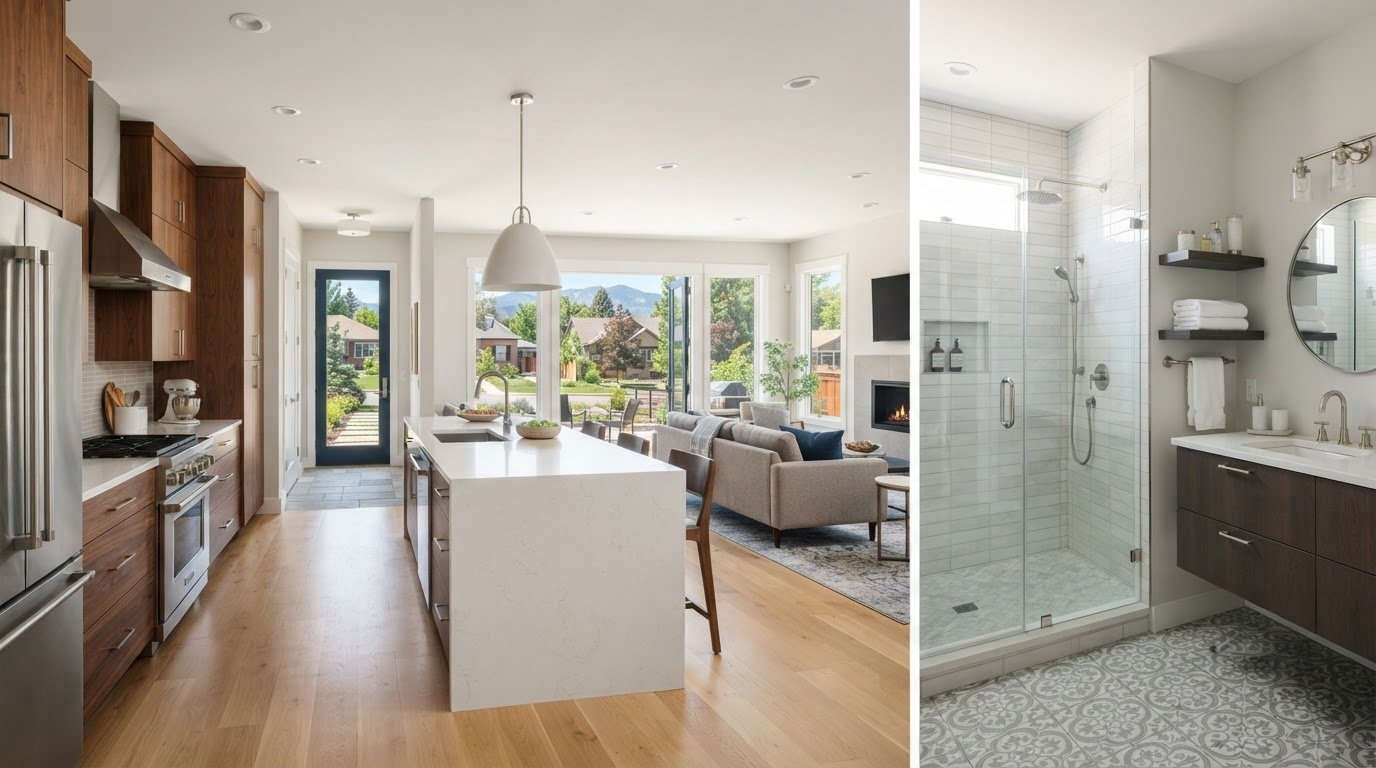
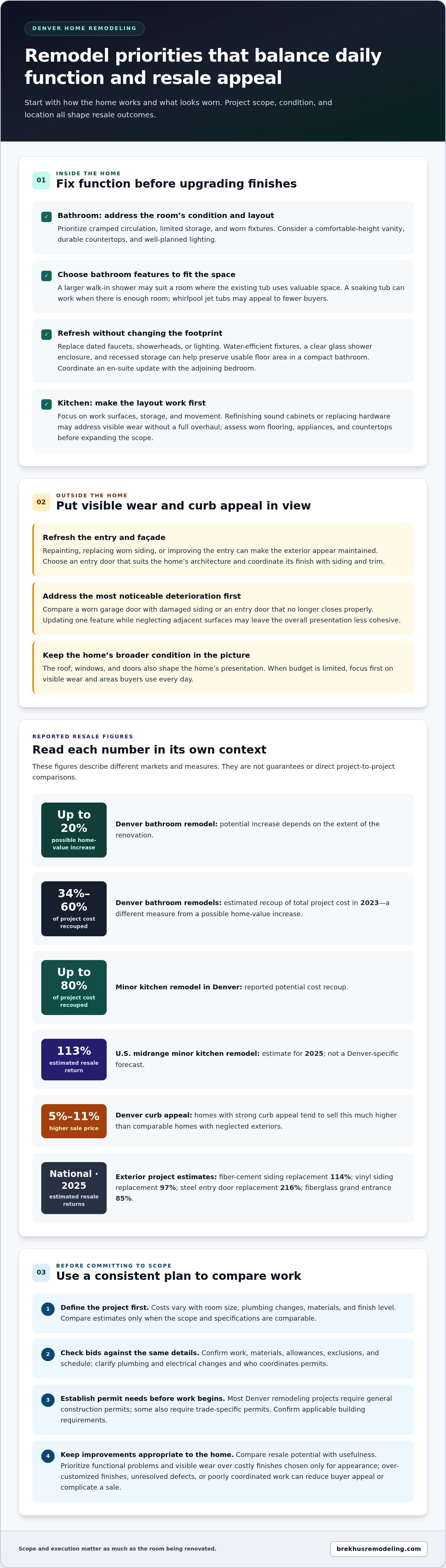
A Denver bathroom remodel may increase a home’s value by up to 20%, depending on the extent of the renovation. For homeowners focused on increasing home value with a remodel in Denver, the goal is to choose improvements that make the home more functional and appealing without overbuilding for the market. The scope and execution matter as much as the room being renovated.
Kitchens and bathrooms often come to mind first, but resale appeal can also depend on curb appeal, the condition of exterior features, and usable living space. A larger project is not automatically a better investment. The right remodel addresses how the home functions and what buyers are likely to notice.
This article explains how kitchen and bathroom remodels, exterior updates, and additions may affect resale value in Denver. It also covers basement finishing and entry improvements, with practical ways to prioritize projects by function, condition, and scope.
Key Takeaways
- Prioritize a functional kitchen layout and practical bathroom improvements over costly finishes chosen only for appearance.
- Refreshing an entry door or siding can strengthen curb appeal, while the condition of the roof, windows, and doors also shapes a home’s overall presentation.
- When your budget is limited, focus first on visible wear and the areas buyers use every day.
- Compare remodels by both resale potential and the usefulness they add to your home, since returns vary by project scope and location.
- Consider a basement finish or home addition when it creates purposeful living space that fits the home and its likely buyers.
1. Kitchen and bathroom remodels
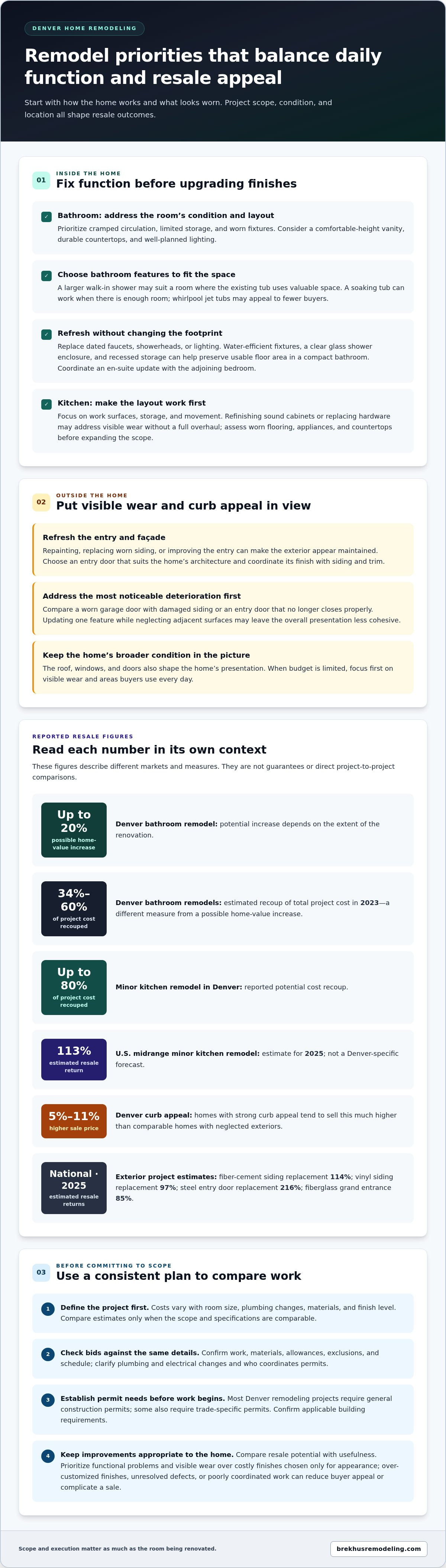
A bathroom remodel may increase a Denver home’s value by up to 20%, depending on the renovation’s extent. Bathrooms rank second among areas buyers typically value most, making a dated bathroom a reasonable priority. For homeowners focused on increasing home value with a remodel in Denver, the most useful scope addresses the room’s function and condition before adding premium finishes.
An en-suite bathroom may benefit from a remodel if its layout feels cramped, storage is limited, or fixtures look worn. Start by improving circulation, then consider a comfortable-height vanity, durable countertops, and well-planned lighting. A larger walk-in shower may suit a room where the existing tub uses valuable space. A soaking tub can still work when the room has enough space, while whirlpool jet tubs may appeal to fewer buyers.
Fixture upgrades can refresh the room without changing its footprint. Replace outdated faucets, showerheads, and lighting, and consider water-efficient toilets, faucets, and showerheads. In a compact Denver bathroom, a clear glass shower enclosure and recessed storage can preserve usable floor area. Coordinate an en-suite update with the adjoining bedroom so the two spaces feel connected rather than like separate design schemes.
Kitchen work has a different value equation. A minor kitchen remodel in Denver can recoup up to 80% of its cost, while a midrange minor kitchen remodel in the United States had an estimated resale return of 113% in 2025. These figures describe different markets and measures, so they aren’t a direct project-to-project comparison. Prioritize the layout, then assess cabinet condition, worn flooring, appliances, and countertops. Refinishing cabinets or replacing hardware may address visible wear without a full overhaul.
Denver bathroom remodel costs vary with room size, plumbing changes, materials, and finish level. A national average is useful only when the project scope and specifications are comparable. Define the work first, then compare estimates against that same scope. Denver bathroom remodels were estimated to recoup 34% to 60% of total project cost in 2023, a distinct measure from a possible increase in home value.
When comparing renovation bids, confirm that each covers the same work, materials, allowances, exclusions, and schedule. Clarify how plumbing and electrical changes will be handled, and who will coordinate permits. Most Denver remodeling projects require general construction permits, and some also require trade-specific permits. Establish the project’s permit needs and applicable building requirements before work begins.
Homes with dated kitchens or bathrooms, inefficient layouts, or en-suites with limited storage may benefit most from targeted improvements. Condition and fit matter more than a neighborhood name alone. Over-customized finishes, unresolved defects, and poorly coordinated work can reduce buyer appeal or complicate a sale. For increasing home value with a remodel in Denver, address functional problems before decorative upgrades or outdoor features.
2. Entry door, siding, and kitchen remodel returns
For Denver homeowners, reported return on investment varies by project scope and location. A minor kitchen remodel in Denver can recoup up to 80% of its cost. A Denver bathroom remodel may recoup 34% to 60% of total project cost, based on 2023 estimates. These figures answer the average-return question, but they’re not guarantees for an individual home.
A practical starting point for a kitchen remodel is its layout. Improve work surfaces, storage, and movement before investing heavily in finishes or appliances. For example, relocating a work area may make meal preparation easier, while refinishing sound cabinets can refresh the room without replacing everything. Removing a non-load-bearing wall may also open up the plan, where the existing structure allows.
Scope matters. Updating hardware, refinishing cabinets, or replacing worn flooring can address visible wear with fewer changes than a full renovation. If countertops or appliances are dated, prioritize replacements that coordinate with the cabinets and the kitchen’s overall quality. That national estimate is not a Denver-specific forecast.
Exterior work can influence a buyer’s first impression before they enter the home. Denver homes with strong curb appeal tend to sell 5% to 11% higher than comparable homes with neglected exteriors. Repainting, replacing worn siding, and improving the entry can make the façade appear maintained. National 2025 estimates put the resale return at 114% for fiber-cement siding replacement and 97% for vinyl siding replacement.
An entry door is both a focal point and a frequently used feature. A steel entry door replacement in the United States had an estimated resale return of 216% of its cost in 2025; a fiberglass grand entrance returned an estimated 85%. These national figures compare different project types. Choose a door that suits the home’s architecture, then coordinate its finish with the siding and trim.
A garage door takes up a large, visible area on many Colorado homes. Replacing a worn door can sharpen the façade and improve the appearance of the frontage. Compare this update with other exterior needs, such as damaged siding or an entry door that no longer closes properly. Addressing the most visible deterioration first can create a more coherent presentation than upgrading one feature while neglecting adjacent surfaces.
For a planned kitchen redesign, custom kitchen remodeling can bring layout, cabinetry, countertops, and finish choices into a coordinated scope. A well-defined plan helps homeowners direct investment toward function and consistent execution, rather than isolated upgrades.
3. Focusing on high-impact areas
In Denver, remodels with strong resale potential tend to improve kitchens, bathrooms, usable living space, or curb appeal. Start by identifying the home’s most visible or limiting condition. A dated kitchen that disrupts daily use, a worn entry, or an unfinished basement offers a clearer target than adding premium finishes everywhere.
First impressions begin before buyers reach the front door. In Denver, native plants, fresh mulch, and a defined paved walkway can make the approach feel orderly and intentional. Landscape lighting can clarify paths and highlight the entry after dark. Choose plants suited to the home’s scale, and keep sightlines clear around windows, steps, and the garage.
Next, assess the exterior as a whole. A sound roof, intact siding, and well-maintained doors help a home look cared for. Repainting or replacing visibly worn materials can create a more consistent façade than changing one small detail. In a Colorado outdoor living area, a covered patio or pergola can provide shade and define a seating space.
Inside, prioritize improvements that solve a specific problem. A finished basement can create room for an office, guest suite, or recreation area, while adjusting the kitchen layout can improve storage and movement. These projects add practical function, not just visual novelty. Buyers can more easily understand a room with a clear purpose than an unfinished space that needs substantial work.
Energy performance can also influence how a home is evaluated. Insulation improvements in walls, attics, and basements address heat loss through the building envelope. Energy-efficient windows can complement that work, especially where existing windows are visibly worn. In 2024, 36% of U.S. buyers rated smart home capabilities highly important during their home search, so consider useful features alongside fundamental repairs.
With a limited budget, rank projects by condition, visibility, and daily use. Address defects first, improve the entry and exterior presentation next, then direct remaining resources toward the kitchen, bathroom, or living space. For example, repair a deteriorated roof before adding decorative landscape lighting. This keeps the project focused on buyer-facing needs and avoids polishing features beside unresolved maintenance issues.
In Denver’s real estate market, a coherent overall impression matters more than a collection of disconnected upgrades. Compare the home’s condition with nearby properties, and identify gaps buyers may notice during a showing. A neglected walkway, dark entry, or poorly defined basement can weaken the presentation. Targeting those issues creates a focused plan to improve appeal without over-improving every room.
4. National resale returns for home remodels
National resale figures offer a comparison point, not a Denver-specific prediction. In 2025, a midrange bathroom remodel in the United States had an estimated resale return of 80% of its cost. A composite deck addition returned an estimated 89%. These benchmarks help homeowners compare project types, but local buyer preferences and the home’s condition still shape value.
Exterior upgrades show a wider range. Another estimate says garage door replacement can recoup over 94% of its cost. These are different measures, so don’t treat them as interchangeable: resale value is a dollar estimate, while return compares value with project cost.
Other 2025 national estimates include a 208% resale return for manufactured stone veneer, 95% for a backup power generator, and 90% for replacing windows. Homes with solar panels typically sell around four percent higher than comparable homes without panels. Each figure describes a different improvement and market context, not a guaranteed result for a Denver property.
To estimate remodel ROI using Denver housing data, compare similar local homes with and without the improvement, then account for the project’s full scope and cost. Match property type, condition, and location as closely as possible. Distinguish estimated resale value from the amount recovered against project cost. This is more useful than applying a national percentage directly.
For example, a Denver homeowner considering a deck should compare the project with nearby homes that offer similar outdoor space. The national 89% composite deck estimate can serve as context, while local comparable sales help show whether that feature matters in the property’s segment. A smaller, well-integrated project may align better with the home than a larger addition that changes its character.
Before committing to a project, define the improvement, identify comparable Denver sales, and compare the likely resale contribution with the complete project cost. Include related work, such as replacing fixtures or repairing adjacent damage, rather than assessing one visible component in isolation. This produces an estimate grounded more closely in the local real estate market.
National returns are most useful for ranking options, not setting a resale price. A 90% window return, an 80% bathroom return, and a 208% stone veneer return cannot be compared without accounting for property condition, project scope, and buyer priorities. Use each benchmark to frame research, then base decisions on the home and its Denver market segment.
5. Remodeling and additions as ways to increase home value
Adding useful living space can make a home more adaptable for future owners. A finished basement might serve as an office, guest suite, or recreation room, while an attic conversion can create a separate work area. For Denver homeowners, increasing home value with a remodel starts with choosing a space that solves a genuine need, not adding square footage without a clear purpose.
Denver zoning rules affect whether an accessory dwelling unit (ADU) or home expansion can proceed, and what form it may take. Zoning review considers factors such as lot dimensions, building placement, height, and proposed use. Assess these constraints before developing plans, then account for construction permits and any trade-specific permits the work may require.
Finished basements can appeal to buyers who need flexible space without changing the home’s footprint. Plan for a defined purpose, practical storage, and a layout that connects naturally with the rest of the house. A basement arranged as a comfortable office and guest area can be more useful than a large room without a clear function. Full basement finishing suits homeowners seeking a coordinated, usable lower level.
Energy improvements address another buyer concern: the home’s operating performance. Insulation in walls, attics, and basements can complement energy-efficient windows, helping reduce future utility costs. Buyers also weigh how these upgrades fit the home’s condition and maintenance needs. In 2024, 72% of U.S. home sellers completed at least one home improvement project before selling, reflecting the attention homeowners give to preparing properties for market.
An ADU can provide independent living space, but its value depends on how well it fits the property and its intended use. Before planning one, consider the lot, access, privacy, utility connections, and applicable zoning constraints. An addition that disrupts outdoor space or creates awkward circulation may serve buyers less effectively than a well-planned basement or attic conversion.
For resale planning, compare the proposed project with the home’s existing layout and likely buyer needs. Consider whether it addresses a lack of guest space or workspace, or high energy use. A qualified real estate agent can help assess which improvements align with the local market. The project scope and the home’s overall condition should also guide the decision.
Exterior improvements can help an addition look integrated with the original home. Match rooflines, windows, and exterior finishes so the new work feels cohesive, not like an afterthought. Replacing or upgrading exterior components during an expansion can reduce visual inconsistencies. For increasing home value with a remodel in Denver, a purposeful addition should improve both function and the home’s overall presentation.
For a coordinated lower-level project, plan a full basement remodel around the space’s intended use, circulation, and finish requirements. That planning can help turn underused square footage into a purposeful part of the home.
Brekhus Remodeling: Premium Bathrooms
Brekhus Remodeling helps Denver homeowners plan bathroom renovations, custom showers, kitchen redesigns, and finished basements. Turn to the team when a project calls for coordinated construction and carefully considered details, rather than isolated cosmetic changes. A Premium Bathroom can bring fixtures, surfaces, storage, and layout together in one cohesive plan. Custom Shower Installs address shower-specific design needs, while Custom Kitchens and Full Basements support broader improvements to daily function and usable space. Choose a scope based on the home’s condition, intended use, and resale priorities. Share your remodeling goals and the areas you want to improve with Brekhus Remodeling.
Make Your Next Remodel a Deliberate Investment
Before choosing finishes or expanding the scope, define what the home needs. Identify changes that improve daily use, resolve visible wear, and make the property more coherent for future buyers. For Denver homeowners, increasing home value with a remodel starts with a clear project brief and decisions grounded in the home’s condition, not a trend alone.
Brekhus Remodeling offers Premium Bathrooms, Custom Shower Installs, and Custom Kitchens for Denver homeowners planning focused updates. A well-defined scope gives the project direction, whether the priority is improving a bathroom’s function or reworking a kitchen for better use. Share your goals and the spaces you’re considering with the team to discuss how the work can suit your home.
Contact Brekhus Remodeling today to discuss your remodeling plans. A measured first step can help you move toward a home that works better now and presents with greater intention for its next chapter.
Frequently Asked Questions
Can A Bath Remodel Increase The Value of Your Denver Home?
Yes. A well-planned bathroom remodel can make a Denver home more appealing by resolving functional problems buyers may notice during a showing. Improve storage, coordinate the vanity and lighting, and make sure the shower enclosure works with the room’s layout. Address visible wear before selecting decorative finishes so the renovation feels intentional. The result depends on how well the completed space suits the home and its likely buyers.
How much does a home remodeling project typically cost?
There is no single typical cost for every remodeling project. Pricing depends on the scope, existing conditions, material choices, and whether plumbing, electrical, or structural changes are involved. A surface update differs substantially from reconfiguring a room or renovating several areas. When partnering with Brekhus Remodeling, pricing depends on the project and is provided after a quote request. Define the rooms and desired changes first to make an estimate more meaningful.
What if I can't afford home improvements before listing?
You can prepare a home for listing without taking on a major renovation. Start with presentation and basic upkeep: clear crowded surfaces, clean visible areas, replace burned-out bulbs, and tighten loose cabinet hardware where practical. Then list issues that affect how rooms function and prioritize them within your resources. A tidy, well-maintained home gives buyers a clearer view of its spaces and condition.
How much do common home renovation projects cost in Denver?
Denver renovation costs vary with project scope, existing conditions, finish selections, and work needed behind walls or beneath flooring. A bathroom refresh, kitchen reconfiguration, and basement finish involve different materials and construction requirements, so one average cannot represent them all. When working with Brekhus Remodeling, pricing depends on the project and is provided after a quote request. Describe the spaces, desired changes, and known issues to establish a useful scope.
How do Denver remodeling costs compare with national averages?
Denver remodeling costs generally trend higher than national averages due to local labor markets, material transportation, and regional demand. Additionally, meeting specific local building codes and energy efficiency requirements can influence overall project expenses. Brekhus Remodeling provides customized estimates that reflect current local pricing for your specific neighborhood and property type.
What permits and building codes apply to home remodels in Denver?
Most Denver remodeling projects require a general construction permit, and some also need trade-specific permits. Establish the project’s permit needs and applicable building requirements before work begins.
Which Denver neighborhoods or home types benefit most from remodeling?
Homes with dated kitchens or bathrooms, inefficient layouts, or en-suites with limited practical storage may benefit most from targeted improvements. Condition and fit matter more than neighborhood name alone.